
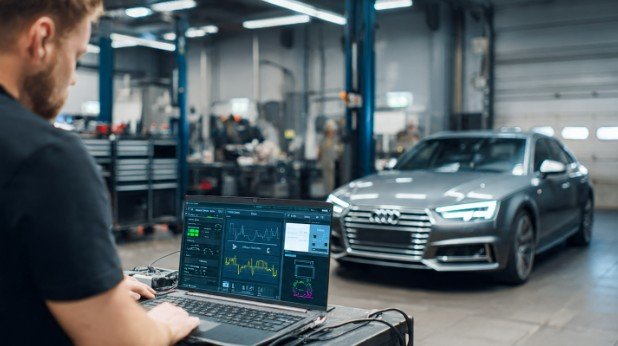
If you are searching for a clear explanation of automotive programming vs coding, you are not alone. Many technicians, workshop owners, and car enthusiasts confuse these two terms because they are often used interchangeably.
However, automotive programming vs coding are not the same process. Programming involves installing or updating firmware inside a vehicle’s control module, while coding adjusts predefined parameters within existing software. Understanding this difference can save you time, money, and potential vehicle damage.
Modern vehicles are software-driven machines. With dozens of electronic control units (ECUs) managing everything from engine timing to driver assistance systems, knowing whether your vehicle requires programming or coding is essential before connecting any diagnostic tool.
Key Takeaways
- Automotive programming vs coding are two different processes in vehicle software management.
- Programming installs or updates firmware inside a control module.
- Coding adjusts predefined settings within existing software.
- Programming is more technical and carries higher risk if interrupted.
- Coding is mainly used for feature activation and customization.
What Is Automotive Programming?

Automotive programming refers to the process of installing, updating, or rewriting firmware inside a vehicle’s electronic control unit. This is commonly required when replacing a blank ECU, applying manufacturer software updates, or fixing known issues listed in technical service.
Programming directly changes the operational software of the module. Without programming, a newly installed ECU will not communicate with the vehicle network. The process often requires OEM-level access, a J2534 pass-through device and a secure internet connection.
Companies like Autel and Launch Tech manufacture tools that support module programming for various vehicle brands. Because firmware is being rewritten, programming carries higher risk than coding. If voltage drops or the process is interrupted, the module may become unusable.
When Is Automotive Programming Required?
Programming is necessary when a new blank module is installed, when updating outdated firmware, when fixing manufacturer recall issues, or when integrating a control unit into the vehicle network for the first time.
It is also required after replacing certain immobilizer or powertrain components.In these cases, coding alone will not solve the issue because the software itself must be installed or updated.
What Is Automotive Coding?
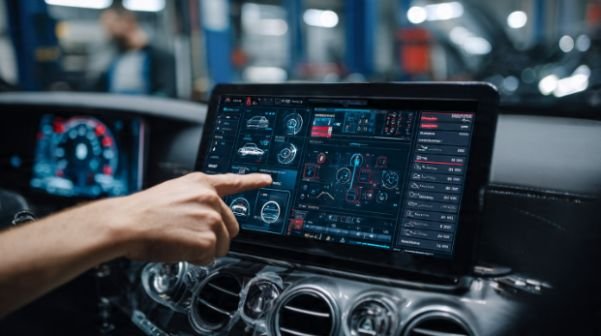
Automotive coding modifies settings within existing firmware without rewriting the software itself. Instead of installing new software, coding adjusts how the module behaves using predefined parameters.
For example, coding can enable automatic mirror folding, modify daytime running light brightness, adjust start-stop sensitivity, or customize dashboard messages. These features are often built into the software but disabled based on region or trim level.
Coding is generally faster and less complex than programming. However, incorrect parameter changes may still trigger system warnings or unintended behavior reinforcement.
When Is Automotive Coding Enough?
Coding is sufficient when enabling or disabling comfort features, personalizing infotainment behavior, adjusting lighting functions, or modifying non-critical system preferences. It is commonly used for feature activation rather than core system repair.
Unlike programming, coding changes are often reversible. Still, technicians should always record original values before making modifications.
Automotive Programming vs Coding: Key Differences
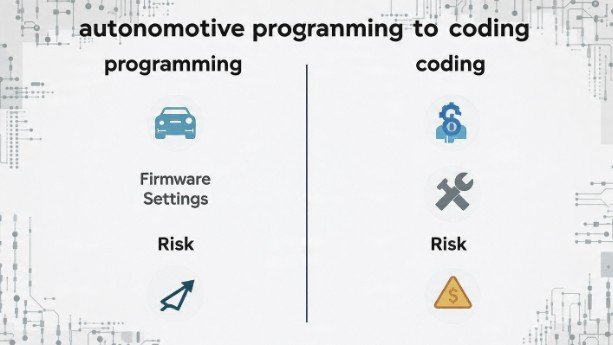
The primary difference between automotive programming vs coding lies in software depth. Programming installs or updates firmware, while coding adjusts operational settings inside that firmware. Programming is more technical, takes longer, and carries higher risk.
Coding is quicker, typically less expensive, and focuses on customization. Programming usually requires OEM subscriptions and advanced tools. Coding can sometimes be performed using high-level aftermarket scan tools or mobile applications.
Programming often costs more due to licensing fees and technical complexity, whereas coding may be more affordable for vehicle owners.
Tools Needed for Automotive Programming vs Coding
Both processes require a Vehicle Communication Interface connected to the car’s OBD-II port. Programming often requires J2534 pass-through devices, manufacturer software access, and battery stabilization equipment to prevent voltage drops.
Some workshops also rely on battery stabilizers from brands like Topdon to protect modules during firmware flashing. Stable voltage is critical because even minor interruptions can corrupt the control unit.
Coding tools range from professional diagnostic platforms to manufacturer-specific software systems. The level of tool required depends on the vehicle brand and the depth of customization.
Legal and Warranty Considerations

Before performing automotive programming vs coding, it is important to consider legal and warranty implications. Altering emissions-related systems may violate federal regulations governed by the Environmental Protection Agency.
Similarly, disabling safety features could lead to compliance issues.Manufacturers may also log software changes. Unauthorized modifications might impact warranty claims, especially if a failure is linked to altered settings.
Risks Associated With Automotive Programming and Coding
Programming carries higher risk because it rewrites firmware. If the process fails, the module may stop functioning completely. Internet interruptions, incorrect VIN mapping, or low battery voltage are common causes of programming failures.
Coding has lower risk but can still cause system errors if incorrect values are entered. Warning lights, feature malfunctions, or system resets may occur if parameters are not properly configured.Professional training and proper equipment significantly reduce these risks.
Cost Comparison
Automotive programming is typically more expensive than coding. Programming costs vary depending on vehicle brand and module type, often ranging from moderate to high due to OEM subscription fees and labor time.
Coding is generally more affordable and sometimes offered as a value-added service by workshops. DIY coding may reduce cost, but improper attempts can lead to expensive repairs.
Real-World Scenario
Consider a vehicle with a failed transmission control module. After replacement, the technician must first program the module with correct firmware so it can communicate with the vehicle.
Once programming is complete, coding may be required to adjust shift parameters specific to the vehicle configuration. This example demonstrates that automotive programming vs coding are sometimes used together during a single repair.
Why Automotive Programming and Coding Matters Today
Modern vehicles may contain more than 70 control modules. Electric vehicles and advanced driver assistance systems rely heavily on software coordination. Workshops that understand automotive programming vs coding can diagnose issues more accurately.
Avoid unnecessary part replacement, and deliver better customer outcomes.As vehicle technology advances, software expertise is becoming a core requirement in automotive repair.
Frequently Asked Questions
1. What is automotive programming and coding?
Automotive programming installs or updates firmware in vehicle modules, while coding adjusts predefined settings within that firmware.
2. Is automotive coding safe?
Yes, when performed correctly within manufacturer-approved parameters. However, incorrect changes may trigger system faults.
3. Can I perform automotive programming at home?
Programming usually requires OEM access and professional tools. DIY attempts carry risk of module damage.
4. Does coding void vehicle warranty?
It depends on manufacturer policy. Unauthorized changes may affect warranty claims.
5. Which is more expensive: automotive programming vs coding?
Programming is generally more expensive due to software licenses and complexity.
Automotive Programming vs Coding
Understanding automotive programming vs coding helps you make the right technical and financial decision. Programming changes core software; coding modifies behavior settings. Both are essential in modern vehicle servicing, but they require different tools and precautions.
As vehicles become more software-driven, mastering automotive programming vs coding will no longer be optional for serious technicians. It is becoming a foundational skill in the automotive diagnostics industry.