
I used to end every workday feeling 20 years older than I actually am. My neck felt tight, my hips locked up, and my shoulders crept toward my ears like they planned to live there.
Once I started practicing mobility exercises for desk workers consistently, everything changed. Not dramatically overnight. But steadily. My posture improved. My back stopped complaining. My energy lasted longer than my inbox.
Now I treat movement like brushing my teeth. Non-negotiable. Quick. Habit-based. And surprisingly powerful.
If you sit most of the day, I want to show you exactly how I structure my routine.
Why Do Mobility Exercises for Desk Workers Matter So Much?

When you sit for hours, your hips tighten, your spine stiffens, and your shoulders round forward. Your body adapts to the position you feed it most often. Sitting becomes your default setting.
Mobility exercises for desk workers counter that pattern. They restore movement to your neck, spine, hips, and shoulders. They improve circulation and reduce the joint stress that builds into chronic pain.
I stopped thinking of mobility as “extra fitness.” I started seeing it as maintenance. Like changing the oil in your car. Ignore it long enough and things break down.
What Does an Ergonomic Setup Have to Do With Mobility?
Before I added more movement, I fixed my desk setup. That decision saved my back.
I adjusted my chair so my feet sit flat on the floor and my knees bend at 90 degrees. I made sure my lower back touches proper lumbar support. I left a small gap between the seat and the back of my knees so circulation stays strong.
Then I fixed my monitor. I positioned the top third of my screen at eye level and placed it about an arm’s length away. I tilted it slightly back so my gaze feels natural instead of forced.
Once I aligned my keyboard and mouse at elbow height and kept my wrists neutral, my shoulders relaxed. I stopped overreaching. I stopped hunching.
Mobility works best when your setup supports neutral posture. You cannot stretch your way out of a bad workstation.
Which Seated Mobility Exercises for Desk Workers Do I Actually Use?
I keep it simple. I don’t overcomplicate it. I run through a short sequence every hour.
First, I do seated spinal twists. I rotate gently toward the back of my chair and hold for about 20 seconds each side. I feel the stiffness release from my mid-back immediately.
Next, I move into seated cat-cow. I inhale, arch my spine, and lift my chest. Then I exhale and round forward. Five slow cycles reset my posture and wake up my core.
I also love the seated figure-4 stretch. I cross one ankle over the opposite knee and hinge forward slightly. My glutes and hips feel human again.
Then I finish with shoulder rolls and controlled neck tilts. I avoid full circles because they strain the neck. Slow, intentional movement wins every time.
What Standing Moves Give Me the Biggest Return?

When I stand, I create more range of motion and activate more muscle.
Desk pushups fire up my chest and arms while opening my shoulders. I aim for 10 to 15 controlled reps.
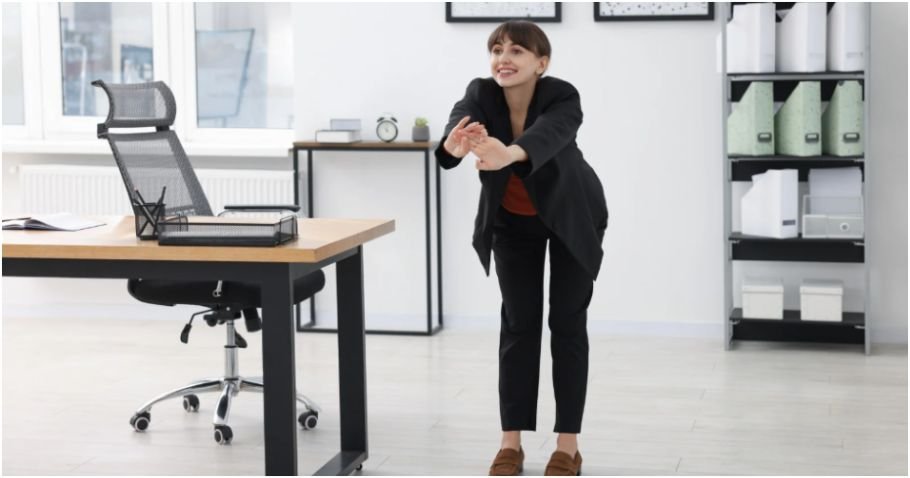
Chair squats wake up my glutes. I lower my hips until I almost touch the seat, then stand tall. This move reverses hours of hip compression.
Hip flexor stretches feel like magic after long meetings. I step one foot back, tuck my pelvis slightly, and lean forward. I feel the front of my hip open instantly.
Wall angels might look simple, but they challenge posture hard. I slide my arms up and down against the wall and keep my ribs down. My upper back thanks me every time.
How Often Should You Do Mobility Exercises for Desk Workers?
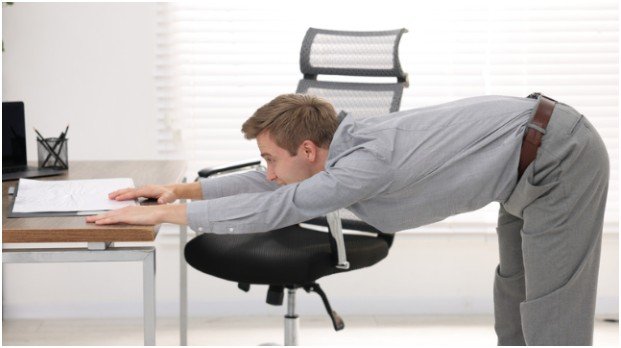
I follow the 30-minute rule.
Every 30 to 60 minutes, I move for one to three minutes. That rhythm keeps stiffness from building. I don’t wait until pain shows up.
Here’s the structure I use most days:
| Time Block | Action |
| 9:30 AM | Seated cat-cow + neck tilts |
| 10:30 AM | Spinal twists + shoulder rolls |
| 11:30 AM | Chair squats + hip stretch |
| 2:00 PM | Desk pushups + wall angels |
| 4:00 PM | Full mini sequence reset |
Short movement snacks beat one long workout after eight hours of sitting. Consistency creates results.
How To Build Your Daily Mobility Routine Step by Step
First, fix your workstation. Adjust your chair height, lumbar support, monitor position, and keyboard alignment. You want neutral posture before you add movement.
Second, choose three seated movements and two standing movements. Keep the list short so you actually follow through.
Third, set a timer for every 45 minutes. When it goes off, stand up immediately. Don’t negotiate with yourself to create a worklife balance lifestyle.
Fourth, move slowly and breathe intentionally. I focus on quality over speed. Mobility improves when you stay controlled.
Fifth, track how your body feels at the end of the day. Notice less stiffness. Notice better focus. Reinforce the habit with that feedback.
You don’t need motivation. You need structure.
Do Ergonomic Accessories Actually Help?
Yes, when you use them correctly.
If your chair sits too high and your feet dangle, grab a footrest. Stable feet create stable hips.
If you use a laptop, raise it with a stand and pair it with an external keyboard and mouse. Looking down all day destroys neck posture.
I switched to a vertical mouse last year. My forearm strain disappeared within weeks. That handshake grip reduces rotation stress on the wrist.
Accessories don’t replace mobility exercises for desk workers, but they support them. Think of them as reinforcements.
Key Takeaways
- Mobility works when you practice it consistently.
- Your desk setup determines how your body feels by 5 PM.
- Short, frequent movement breaks beat long, rare sessions.
- Neutral posture protects your joints before pain starts.
- You control how your workday shapes your body.
Frequently Asked Questions
1. How long does it take to feel results from mobility exercises for desk workers?
Most people notice reduced stiffness within a week if they move consistently. I felt changes in my posture and neck tension in about five days. Pain reduction takes longer if you’ve ignored it for years, but energy and flexibility improve quickly when you commit to regular movement breaks.
2. Can mobility replace my gym workouts?
No. Mobility supports strength training, but it doesn’t replace it. I still lift weights and walk daily. Mobility helps me recover better and maintain range of motion. Think of it as maintenance, not your main workout.
3. What if I forget to move during busy days?
I tie mobility to habits I already have. After every meeting, I stand and stretch. After every coffee refill, I do chair squats. Habit stacking works better than relying on memory alone.
4. Are these exercises safe if I have back pain?
Most gentle mobility movements feel safe, but chronic or sharp pain needs medical guidance. If something hurts sharply, stop immediately. Move within comfortable ranges and focus on slow control.
Your Desk Does Not Get the Final Say
Your desk job does not control your body. Your habits do.
When I committed to daily mobility exercises for desk workers, I stopped feeling trapped by my chair. I started finishing my day with energy instead of stiffness.
Stand up right now. Roll your shoulders. Twist gently. Reset your posture.
Your future back will thank you.